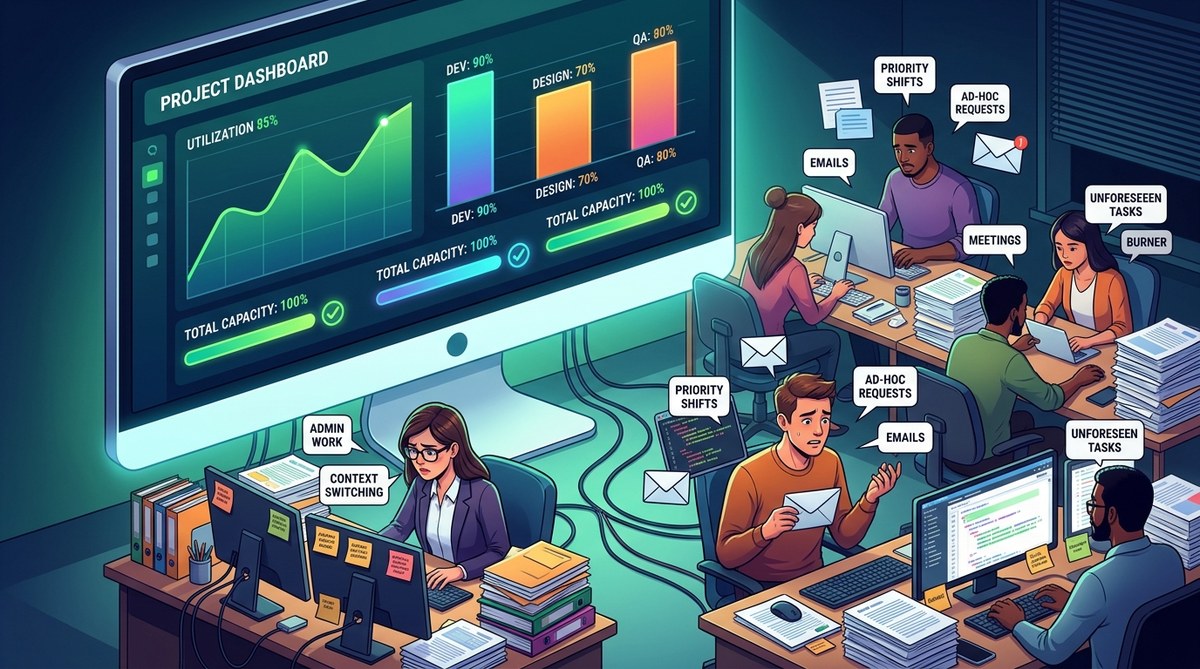
Your team is busy. Everyone is moving. But the wrong things are getting done.
You see it in the daily standups. Sarah is finishing a report nobody will read. Mark is polishing a feature that was deprioritized last quarter. Meanwhile, the client demo is missing its core slides. This is the classic symptom of broken task prioritization problems. It is not a lack of effort. It is a lack of alignment.
When your team works on what feels urgent instead of what matters, you burn through budget and morale. The fix is not to tell people to “work harder.” The fix is a system that makes the right choice the easy choice. Let’s walk through exactly how to build that system.
Task prioritization problems usually come from unclear goals, too many competing stakeholders, and a lack of a shared decision-making framework. The solution is to define one objective per cycle, use a simple scoring method like RICE, and audit your workflow for hidden priorities that drain energy. This article gives you the exact steps to fix each layer.
The Real Reason Your Team Prioritizes Poorly
Most teams do not have a prioritization problem. They have a “who decides” problem.
When three different stakeholders each believe their project is the top priority, the team gets pulled in three directions. They try to make everyone happy. The result is fragmented work. Half-finished tasks pile up. Context switching skyrockets.
Another common cause is the lack of a shared definition of value. One person thinks “value” means revenue. Another thinks it means customer satisfaction. A third thinks it means finishing a technical debt item. Without a common language for value, your team will always default to whoever shouts loudest.
Let’s look at the most common mistakes teams make and how to fix them.
| Common Mistake | What It Looks Like | The Fix |
|---|---|---|
| Everything is urgent | Every task is labeled “high priority” | Use a single priority scale (P0-P3) with strict definitions |
| Stakeholder ping pong | Priorities change every time a VP sends an email | Set a weekly decision window for reprioritization |
| No clear goal | Team works on tasks that don’t tie to a measurable outcome | Define one OKR per sprint or cycle |
| Hidden priorities | Team spends hours on internal tools nobody asked for | Run a workflow audit to surface low-value work |
| Fear of saying no | Team accepts every request, leading to burnout | Use a “cost of delay” calculation to justify declining work |
A 3-Step Process to Fix Task Prioritization Problems
Here is a repeatable process you can start using this week. It works for product teams, marketing teams, and operations teams.
Step 1: Define One Objective Per Cycle
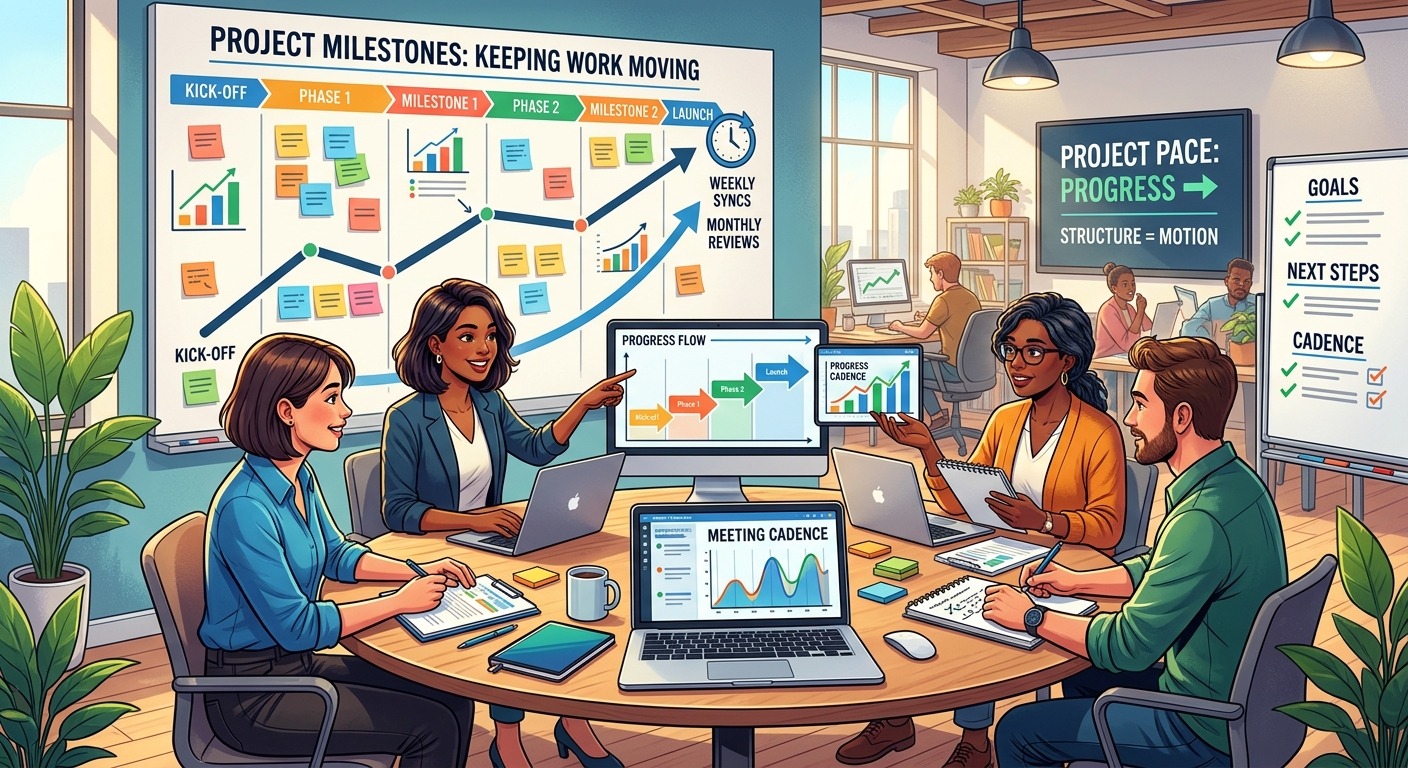
Your team can only focus on one big thing at a time. Pick a single objective for the next two weeks. Write it down. Put it at the top of your project board.
For example, instead of “improve the onboarding experience and fix the checkout bug and update the knowledge base,” pick one. “Reduce time to first value for new users by 30%.” That is your north star. Every task that does not serve that goal gets deprioritized.
This sounds simple, but it is hard. Stakeholders will push back. You need to protect the team’s focus. If you need help structuring this, check out our guide on master effective project planning strategies for seamless delivery.
Step 2: Score Every Task with a Lightweight Framework
Stop using gut feel to decide what matters. Use a simple scoring model. The RICE framework works well for most teams.
- Reach: How many people will this impact?
- Impact: How much will it move the needle? (Scale 1-5)
- Confidence: How sure are you of your estimates? (Scale 1-5)
- Effort: How many person-days will it take?
Score each task by multiplying (Reach x Impact x Confidence) / Effort. Stack rank your list. Work the top items first.
This removes the emotion from prioritization. It also gives you data to push back when someone asks for a low-scoring task to be moved to the top.
Step 3: Schedule a Weekly Reassessment
Priorities shift. That is normal. But they should not shift daily. Block 30 minutes every Friday to review the priority list.
Ask these three questions:
1. Has our main objective changed?
2. Are any tasks blocked that need reprioritization?
3. Is anyone over capacity?
If the answer to question one is yes, you need to decide if the change is worth the cost of context switching. If the team loses two days of productivity to switch gears, the new priority better be worth it.
The Hidden Priorities That Drain Your Team
Sometimes the biggest task prioritization problems are invisible. These are the tasks nobody assigned but everyone does.
- Overcommunication: Responding to every Slack message within 5 minutes. It feels productive. It kills deep work.
- Perfect formatting: Spending hours making internal docs look like published reports. Stop.
- Hero fixes: Jumping in to fix a bug that happens once a year instead of documenting a workaround.
- Meeting prep overkill: Building slides for a 15-minute status update. Use a shared doc instead.
These hidden tasks eat up hours every week. They are not on anyone’s priority list, but they get done anyway.
“The most dangerous priorities are the ones you never wrote down. They hide in your habits and convince you they are urgent. Audit your calendar. If it isn’t on the list, it doesn’t get your time.” — A senior project manager I worked with at a SaaS company.
To catch these, run a workflow audit. Have each team member track their time for three days. Categorize every task as “core work,” “overhead,” or “noise.” You will be shocked at how much noise you find. Our article on 7 signs your team needs a workflow audit and how to run one gives you a ready-to-use template.
Tools That Help (But Won’t Fix Everything)
A tool alone will not solve your task prioritization problems. But the right tool can reinforce good habits.
| Tool Type | Best For | Watch Out For |
|---|---|---|
| Simple Kanban (Trello, Notion) | Small teams, visual workflow | Can become a dumping ground for tasks |
| Integrated PM (Linear, Jira) | Engineering teams, roadmap management | Can be too complex for non-technical teams |
| AI-assisted (Motion) | Automatic scheduling, capacity management | Requires trust in the algorithm |
| Time blocking (Clockwise) | Protecting deep work time | Only works if the team respects the blocks |
The key is to pick one tool and set clear rules for how priorities are communicated. A tool will not stop a VP from emailing a last-minute request. But it can make the cost of that request visible.
If you want to dig deeper into tooling, see our comparison of top project management tools to boost your team’s efficiency.
How to Handle the “Everything Is Urgent” Stakeholder
This is the hardest part of fixing task prioritization problems. You have a stakeholder who believes their request is the most important thing in the world.
Here is a script you can use:
“I hear you. This seems important. Right now the team is focused on [current objective]. We can add your request to the backlog. We will score it against the other work during our Friday review. If it scores high enough, we will pull it in next cycle. If not, I can help you find another team or resource to handle it.”
This approach does two things. It validates the stakeholder’s concern. And it puts the decision into a rational framework instead of an emotional one.
If the stakeholder pushes back harder, ask them to make a tradeoff. “If we do this, we will push the launch date for [other project] by one week. Are you okay with that?” Most of the time, they will back off.
Putting It All Together
You do not need a complicated system. You need a clear objective, a simple scoring method, and the courage to say no.
Start small. Pick one team. Implement the three-step process from this article. Run it for two sprints. Then measure the difference. You will see fewer half-done tasks, less context switching, and a team that actually finishes what it starts.
Task prioritization problems are fixable. They just need a system that makes the right choice obvious. Build that system, protect it from chaos, and watch your team’s output transform.
If you want to go deeper on the planning side, our guide on master agile methodologies to accelerate your project delivery pairs perfectly with the prioritization framework above. And for those days when everything feels urgent, read how to prioritize project tasks when everything feels urgent.
Your team is capable of great work. Give them the clarity they deserve. Start tomorrow morning.