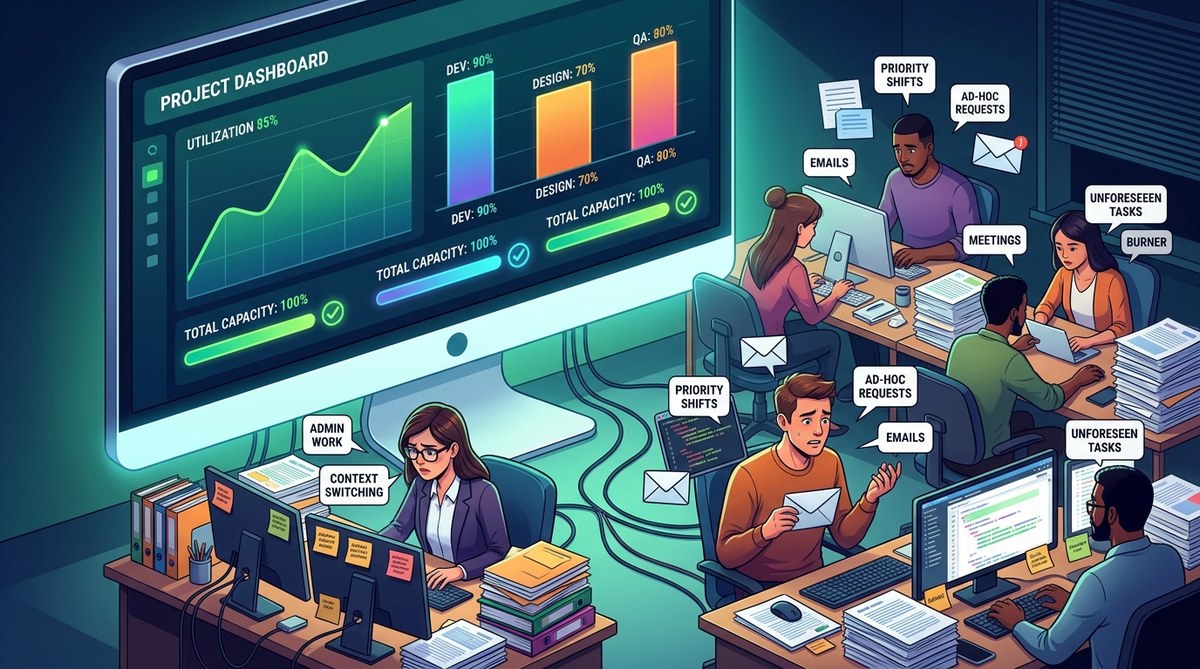
You have been there. The room goes quiet. Someone picks at a lint ball on their sweater. The Scrum Master asks, “What went well?” and the same two people give the same safe answers. The rest of the team stares at their laptops. Thirty minutes later, you have a list of action items that everyone knows will be forgotten by lunch. This is why retrospectives feel like a waste of time. They do not have to be. In 2026, with distributed teams and tighter deadlines, the old “happy talk” retrospective is a liability. A good one is your cheapest tool for continuous improvement.
Retrospectives fail when they lack psychological safety, repeat the same format every sprint, or produce no visible change. Fix them by rotating facilitation, using a structured data-gathering step, and tying every action item to a specific owner and deadline. The goal is not to talk about problems. It is to make one small improvement stick before the next sprint.
The Real Reason Nobody Talks
The number one reason retrospectives feel useless is silence. Your team is not shy. They are protecting themselves. If a developer points out that the code review process is broken, and nothing changes, they learn that speaking up is a waste of breath. After two or three sprints, they stop trying.
Psychological safety is not about being nice. It is about knowing that your honest feedback will not backfire. When a team member mentions a missed deadline, do they get blamed? When someone suggests that the daily standup is too long, does the Scrum Master get defensive? Those small reactions kill the retrospective.
“The single biggest predictor of retrospective success is whether the team believes their input will lead to a change. If you cannot show progress from one sprint to the next, you are better off canceling the meeting.” – Jessica Lange, Agile Coach at a Fortune 500 firm
If you want honesty, you have to protect the messenger. Start by thanking the person who raises the hardest topic. Then make sure that topic gets a clear owner before the meeting ends.
The Three Mistakes That Kill Your Retro
Most teams fall into the same traps. Here are the three biggest mistakes, and how they show up in your meeting.
| Mistake | What It Looks Like | The Fix |
|---|---|---|
| Same format every sprint | “Start, Stop, Continue” for the 12th time | Rotate between Sailboat, 4Ls, and Mad/Sad/Glad |
| No data, just feelings | “It felt like a rough sprint” | Use a timeline or a happiness histogram |
| Action items with no teeth | “Improve testing” with no owner | Assign one person and a due date |
If your retrospective looks the same every time, your team has checked out. They know the script. They can predict the outcome. You need to break the pattern.
A Repeatable Process That Works
Here is a simple structure that takes about 45 minutes and produces real results. Use it for your next three sprints, then change the format.
-
Set the stage (5 minutes). Pick a check-in question that has nothing to do with work. “What is one song you have had stuck in your head this week?” This gets people talking before the serious part starts.
-
Gather data (10 minutes). Give everyone five minutes to write sticky notes for three categories: what helped, what hindered, and what confused us. No talking during this step. You want independent thoughts, not groupthink.
-
Generate insights (10 minutes). Group the sticky notes by theme. Ask the team to vote on the top two themes they want to fix. This is where the real conversation happens.
-
Decide what to do (10 minutes). For each of the top two themes, write one specific action. “Improve testing” is too vague. “Add a pre-commit lint check for null pointers, owned by Sarah, done by Wednesday” is an action.
-
Close (5 minutes). Do a round of “one word” to describe how everyone feels about the next sprint. Then share the action items in your team chat before the meeting ends.
This structure works for remote teams using Miro or Mural, and for in-person teams with a physical whiteboard. The key is the silent writing step. It pulls out ideas from people who would otherwise stay quiet.
How to Keep the Momentum Alive
The retrospective does not end when the meeting ends. The real work happens in the days after. If you do not follow through, next sprint’s retrospective will be a rerun.
- Post the results immediately. Take a photo of the board or export the Miro board. Share it in Slack or Teams with the action items highlighted.
- Check in at the daily standup. The Scrum Master asks, “How is the lint check coming?” for the first two days. After that, it is Sarah’s responsibility to report progress.
- Celebrate the win. When the action item is complete, call it out. “The lint check caught three bugs yesterday. Great job, Sarah.” That positive reinforcement is what builds trust.
If you want to go deeper on team workflow, check out our guide on streamlining team workflows for better project outcomes. It covers how to spot bottlenecks before they slow down the whole sprint.
When You Should Cancel the Retro
Sometimes the best move is to skip the meeting. If your team just shipped a major release and everyone is exhausted, a full retrospective will feel like a chore. Do a five-minute async check-in instead. Ask two questions: “What is one thing we should keep doing?” and “What is one thing we should stop doing?” Collect the answers in a shared doc. That is enough.
The same goes for the sprint after a holiday. Everyone is ramping back up. A full hour of reflection is not needed. A lightweight check-in keeps the habit alive without burning people out.
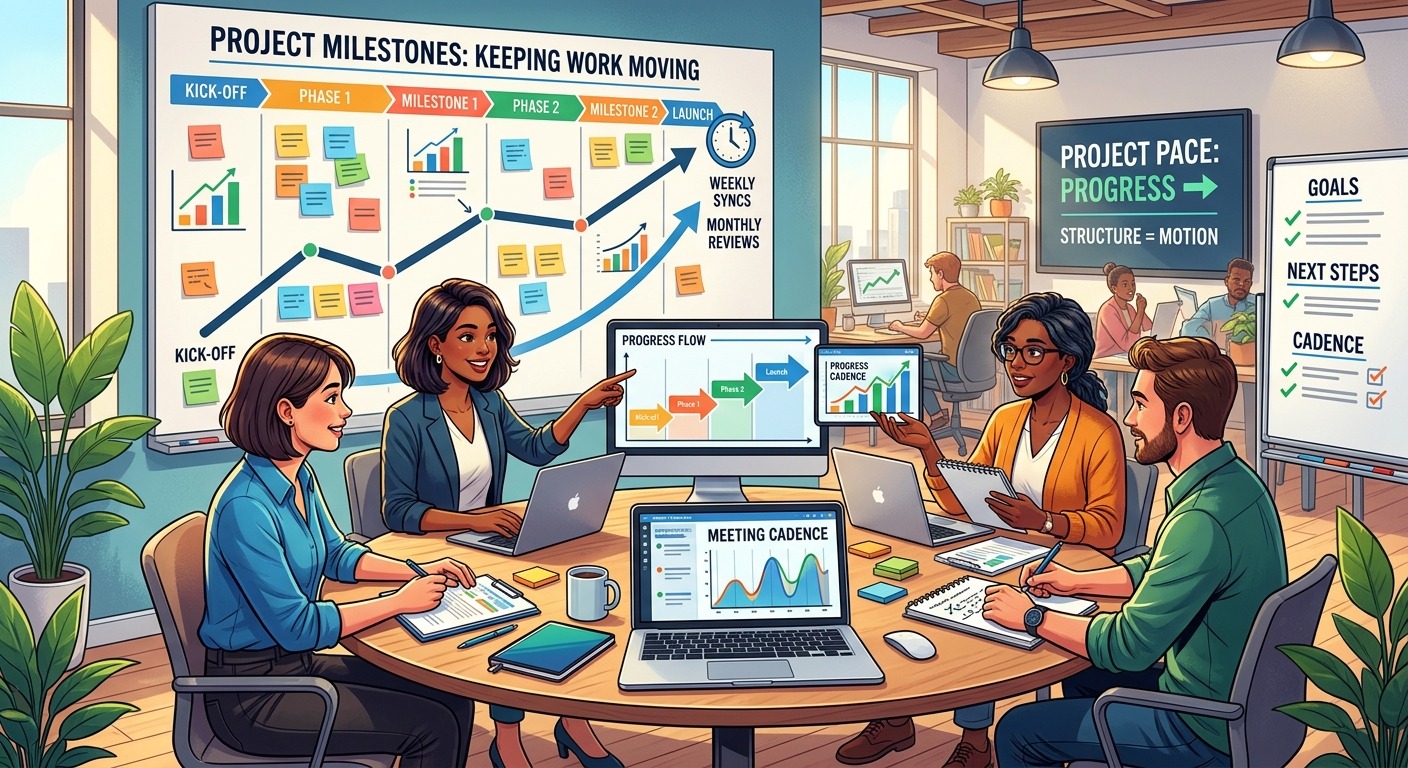
For more on building a healthy meeting rhythm, read our article on how to build a project meeting cadence that keeps work moving. It covers when to meet and when to use async updates instead.
Fixing the “Nothing Changes” Problem
The most common complaint we hear is, “We talk about the same problems every sprint.” That happens when action items are vague or when no one owns them. Here is how to break that cycle.
- Limit your action items. Pick one or two maximum. Trying to fix five things means you fix nothing.
- Make them tiny. “Improve code quality” is too big. “Add a linter rule for unused imports” is tiny. Tiny changes are easy to complete.
- Assign a single owner. Not “the team.” One person. They can ask for help, but they are accountable.
- Set a deadline. It must be before the next retrospective. If it is not done, the team sees that the process failed, not the person.
If you want to track these improvements over time, consider using 5 agile metrics that actually predict project success. Metrics like cycle time and sprint predictability show you if your changes are working.
Tools That Make Retrospectives Easier
You do not need fancy software, but the right tool removes friction. Here are a few options that teams use in 2026.
- Miro or Mural. Great for remote teams. Templates for Sailboat, 4Ls, and Start/Stop/Continue are built in.
- Retrium. Purpose-built for retrospectives. It guides the facilitator through each step.
- A physical whiteboard and sticky notes. Still the best option for co-located teams. The tactile act of writing forces thought.
The tool matters less than the process. A team with sticky notes and a good facilitator will outperform a team with expensive software and no structure.
A Final Thought on Facilitation
If you are the Scrum Master or Agile coach, you do not have to facilitate every retrospective. Rotate the role. Let a developer run the meeting. Let a designer pick the format. When the team owns the retrospective, they invest in its success.
Your job is to protect the space. If someone goes on a tangent, gently bring them back. If someone gets defensive, remind the team of the ground rules. You are the guardian of the process, not the star of the show.
Make Your Next Retrospective the Best One Yet
Here is your action plan for the next 24 hours.
- Pick a new format. If you used “Start, Stop, Continue” last time, try Mad/Sad/Glad.
- Write a check-in question that is fun and unrelated to work.
- Tell the team that the silent writing step is mandatory. No talking until the timer goes off.
- Commit to posting the action items in the team chat before lunch.
That is it. One small change. If you do that, your next retrospective will feel less like a chore and more like a tool. And that is the whole point. A retrospective that produces one real change is infinitely more valuable than an hour of comfortable silence.
For more on planning your sprints effectively, check out our guide on master effective project planning strategies for seamless delivery. It pairs well with a strong retrospective practice.
Go run a good meeting. Your team will thank you.