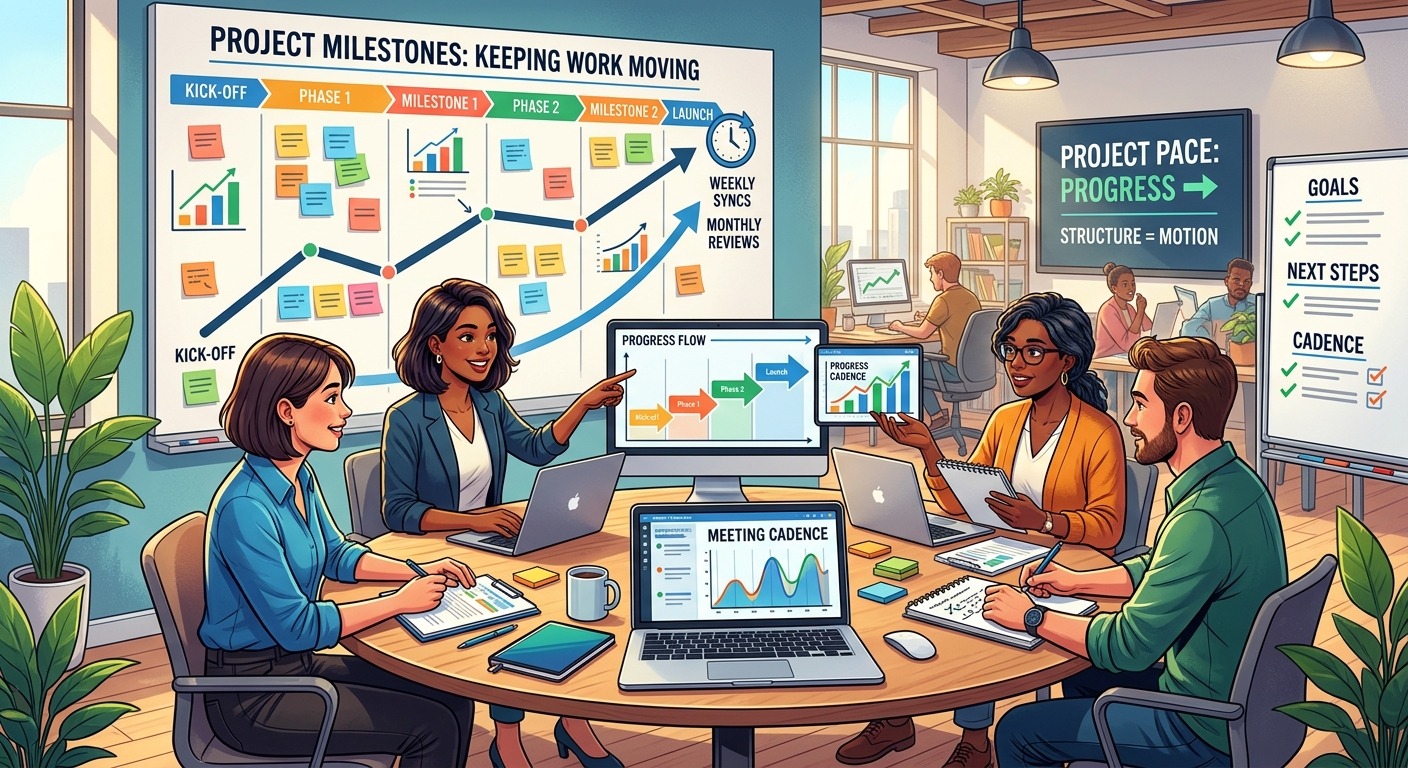
A project wraps up. The team exhales. Everyone is ready to move on to the next thing. But if you skip the project post-mortem meeting, you lose the chance to turn that project’s pain points into your next project’s superpowers. A good post-mortem is not about blaming anyone. It is about learning, documenting, and building a system that helps the whole team improve. When done right, it creates a culture where people feel safe to speak up and where processes actually get better over time.
A project post-mortem meeting is a structured, blameless conversation held after a project ends. Its goal is to identify what worked, what did not, and what the team can do differently next time. This guide gives you a repeatable process, a comparison of common techniques, and practical tips to turn post-mortems into real change rather than just another meeting on the calendar.
What a Project Post-Mortem Meeting Is (and Is Not)
A project post-mortem meeting is a dedicated time for the team to reflect on a completed project. Think of it as a retrospective but scoped to the full project lifecycle. It is not a performance review. It is not a place to assign blame. It is a learning exercise.
The meeting usually happens within a week or two after the project ends. The goal is to capture lessons while the details are still fresh. You want to talk about the timeline, the communication, the tools, and the decisions. You want to surface the small frustrations that people might have brushed aside during the project.
If you have ever run a sprint retrospective, you already have a head start. The project post-mortem meeting is just that same idea applied to a longer time frame. For more on how to keep those shorter cycles productive, check out this guide on why your retrospectives feel like a waste of time.
When to Schedule a Project Post-Mortem Meeting
Timing matters. Schedule the meeting too early, and the team may still be in recovery mode. Schedule it too late, and everyone has forgotten the details.
Here is a simple rule: hold the meeting within one to two weeks after the project’s end date. If the project had a major incident or a critical failure, move it up to within 48 hours. You want the emotional heat to cool down, but you do not want the specifics to fade.
For large projects that lasted several months, consider a mid-project check-in as well. That is not a full post-mortem, but it helps catch issues before they become habits. You can learn more about building a healthy project meeting cadence to support these check-ins.
The 5 Step Process for a Project Post-Mortem Meeting
Follow this process to keep the meeting focused, productive, and blameless.
Step 1: Prepare Before the Meeting
Do not walk into the room cold. Preparation makes the difference between a productive session and a venting session.
- Gather data. Pull the project timeline, task completion dates, budget reports, and any incident logs.
- Send a short survey to the team before the meeting. Ask three questions: What went well? What went wrong? What should we change?
- Appoint a facilitator. This person should not be the project manager. An outside facilitator keeps the conversation balanced.
The facilitator reviews the survey responses and groups them into themes. This pre-work saves everyone time.
Step 2: Set the Ground Rules
Start the meeting by stating the rules out loud. It sets the tone.
- No blame. Focus on processes, not people.
- Everyone speaks. No one dominates the conversation.
- Stay curious. Assume good intent.
Write these rules on a shared screen or whiteboard. If someone starts to point fingers, the facilitator gently redirects.
Step 3: Review the Timeline Together
Walk through the project timeline from start to finish. Mark the highs and the lows.
- What milestones did we hit on time?
- Where did we slip?
- What unexpected events threw us off course?
This step is about building a shared understanding of what happened. Do not jump into solutions yet. Just map the story.
Step 4: Identify Themes and Root Causes
Group the feedback into themes. Common categories include communication, scope management, tooling, and team capacity.
For each theme, ask “why” five times to get to the root cause. For example:
- Theme: Missed deadlines.
- Why? The team underestimated task complexity.
- Why? We did not have historical data to reference.
- Why? We do not track cycle time.
- Why? Our workflow tool is not set up for that.
- Why? We never prioritized that setup.
Now you have a root cause that is actionable. You can decide to configure your tool to track cycle time. That is a specific change you can implement.
For more on capturing and using that data, read about 5 agile metrics that actually predict project success.
Step 5: Create Action Items with Owners
Every theme that needs a change gets an action item. Each action item must have:
- A specific owner (a person, not a team)
- A concrete next step
- A deadline
For example:
| Theme | Root Cause | Action Item | Owner | Deadline |
|---|---|---|---|---|
| Missed deadlines | No cycle time data | Configure Jira to track cycle time | Sarah (Tech Lead) | 2 weeks |
| Communication gaps | No daily standup | Start daily 15 minute standup | Alex (PM) | Next sprint |
| Scope creep | No change request process | Draft a change request template | Priya (Product) | 1 week |
This table becomes your post-mortem output. Share it with the team and stakeholders.
Common Mistakes in Project Post-Mortem Meetings
Even with a solid process, it is easy to fall into traps. Here are the most common mistakes and how to avoid them.
| Mistake | Why It Hurts | How to Fix It |
|---|---|---|
| Skipping the meeting entirely | Lessons are lost, same mistakes repeat | Schedule it as a mandatory project closeout step |
| Letting one person dominate | Others stay quiet, blind spots remain | Use a round robin format or anonymous voting |
| Focusing only on what went wrong | Team morale drops, people feel attacked | Start with wins, then discuss improvements |
| Not assigning owners to action items | Nothing changes after the meeting | Make every action item have a named owner and deadline |
| Holding the meeting too late | People forget details, energy is low | Schedule within 2 weeks of project end |
If you notice your team’s workflow is consistently slowing down, a post-mortem is the perfect place to diagnose why. You might find patterns that point to a need for a full workflow audit.
Three Popular Post-Mortem Templates
Different projects call for different formats. Here are three templates you can use.
Start, Stop, Continue
This is the simplest format. The team lists things they should start doing, stop doing, and continue doing. It works well for small teams and short projects.
The 4 Ls
This template asks the team to reflect on four categories: Liked, Learned, Lacked, and Longed For. It is more structured and helps surface emotional responses.
Timeline Review
This format focuses on a chronological walkthrough of the project. It works best for complex projects with many phases or incidents. You map each event, the response, and the outcome.
You can combine these templates. For example, use the timeline review to build shared context, then switch to the 4 Ls to capture feelings.
“The best post-mortems feel like a team sport, not an audit. When people feel safe to say ‘I made a mistake’ or ‘I did not understand the requirements,’ that is when real learning happens.” – Senior Engineering Manager at a SaaS company
How to Keep the Momentum After the Meeting
The meeting ends. You have a list of action items. Now what?
- Share the notes with everyone, including stakeholders who could not attend.
- Review the action items at your next team meeting to track progress.
- Add the action items to your project management tool as tasks.
- Celebrate the wins you identified. Positive reinforcement builds trust.
If you do not follow up, the post-mortem becomes a one time event with no impact. That is how teams stay stuck in the same patterns.
For a deeper look at how to turn project documentation into something your team actually uses, see this guide on async video project docs.
Making Your Project Post-Mortem Meeting a Habit
One post-mortem is good. A culture of post-mortems is better.
Add a post-mortem as a required step in your project closeout checklist. Make it part of your team’s definition of done for any project that lasts longer than two weeks.
Over time, your team will build a library of lessons learned. New team members can read past post-mortems to avoid old mistakes. You will start to see patterns across projects. That is when the real improvement happens.
If you are juggling multiple projects and struggling to find time for reflection, try time boxing for project managers to protect that time on your calendar.
How a Project Post-Mortem Meeting Differs from a Retrospective
People often use these terms interchangeably, but they are not the same.
A retrospective is a short, recurring meeting that happens at the end of a sprint or iteration. It is focused on the team’s process over a short time frame.
A project post-mortem meeting happens at the end of a full project. It covers the entire project lifecycle, including stakeholder management, budget, and scope. It is broader in scope and involves more people.
Both are valuable. Use retrospectives for continuous improvement within a project. Use post-mortems for the big picture lessons after the project ends.
Final Thoughts on Running a Project Post-Mortem Meeting
A project post-mortem meeting is one of the most effective tools a project manager has. It turns experience into improvement. It builds trust. It prevents the same mistakes from happening twice.
The key is to keep it structured, blameless, and action oriented. Prepare ahead of time. Follow a clear process. Assign owners. Follow up.
Your team will thank you. Your next project will run smoother. And you will sleep better knowing you are not just moving from one fire to the next.
Start with your next project. Schedule the post-mortem before the project even ends. Make it a non negotiable part of your workflow. That is how you build a team that learns and grows together.