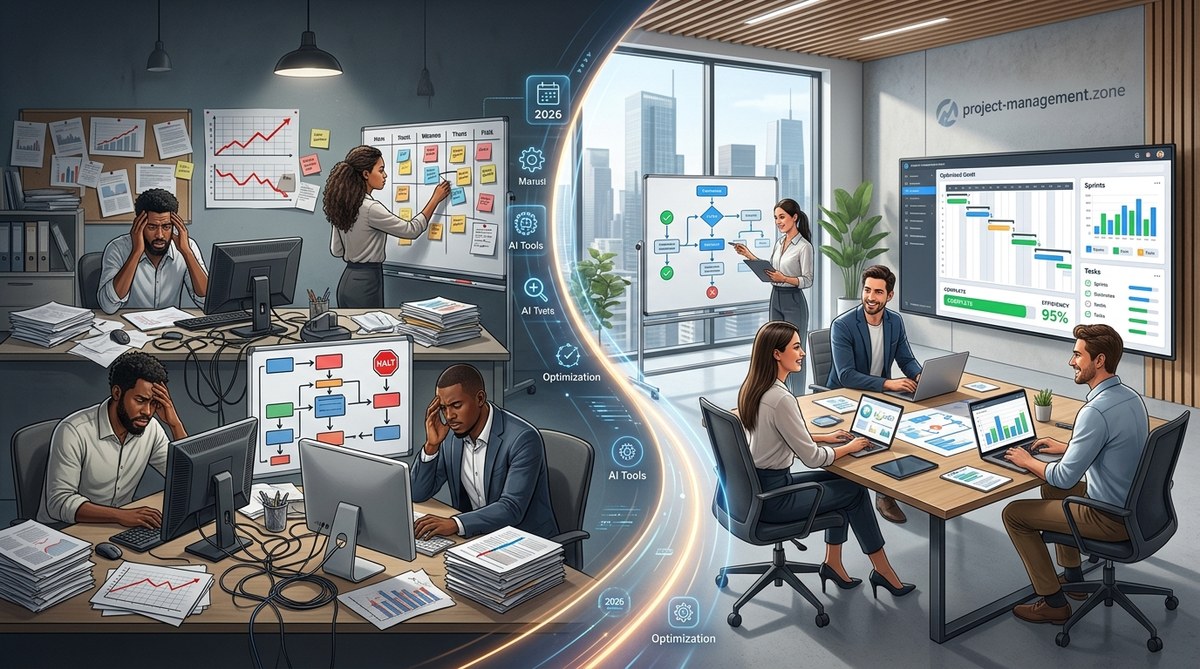
Your team is hitting repeatable delays. Not the one-off kind caused by a sick day or a client emergency. The kind where a task sits in a digital pile for three days because nobody knows who should pick it up next. Or where a simple approval turns into a six-email thread that derails an entire sprint.
These frictions are workflow bottlenecks, and they are the single biggest drag on delivery speed for growing teams in 2026. The good news is that most of them are fixable without a complete tool overhaul. You just need to know where to look and how to rewire the flow.
Workflow bottlenecks in 2026 fall into four main categories: unclear handoffs, approval chain bloat, overloaded individuals, and process gaps in async work. By auditing your team’s actual flow instead of its tool setup, you can pinpoint the slowest step. The fix often involves setting clear definitions of done, limiting work in progress, and using structured async updates. Small changes here can recover days of lost momentum each month.
The Real Reason Your Workflow Feels Stuck
Most managers assume a slowdown is a people problem. They think someone is slacking, or a team member lacks skill. But more often than not, the bottleneck is a structural issue. It lives in the handoff between steps, not inside any single person.
Think about the last time a task moved from design to development. Did the designer include all the specs? Did the developer have to chase down a file? That chase is the bottleneck. It is invisible on a Gantt chart, but it eats hours.
In 2026, teams are more distributed than ever. Async work is the norm. That makes these invisible handoffs even more dangerous. You need a framework to spot them before they become a crisis.
The Four Most Common Bottlenecks in 2026
Here is a breakdown of the biggest workflow bottlenecks we see in modern teams. Each one comes with a fix you can apply this week.
| Bottleneck | How It Looks in Practice | The 2026 Fix |
|---|---|---|
| Unclear Handoffs | Work sits in a “Needs Review” column for days. Nobody claims it. | Define a clear “definition of done” for each stage. Attach a named reviewer to every status change. |
| Approval Chain Bloat | Every decision needs three sign-offs. A simple copy change waits for a VP. | Use a tiered approval system. Only route to senior leaders for budget or scope changes. |
| Overloaded Individuals | One person is assigned to every blocked task. They become the bottleneck. | Set a Work In Progress (WIP) limit. No person can carry more than three active tasks. |
| Async Communication Gaps | Updates are buried in a long Slack thread. Nobody reads them. | Use a structured async format. Record a short video update or post a standardized status template. |
How to Diagnose Your Own Bottlenecks
Before you fix anything, you need to find the actual constraint. Do not guess. Use data.
1. Map the End-to-End Flow
Sit down with a whiteboard or a digital tool. Draw every step a task takes from idea to done. Include the informal steps, like “waiting for a reply” or “checking with legal.” Be honest. If a step involves a two-day wait, mark it.
2. Measure Wait Times
Look at your project management tool. For each column or status, check the average time a card sits there. If a “Review” column has a five-day average while “In Progress” has two days, you found your bottleneck.
3. Run a Team-Led Audit
Ask your team one question: “Where does your work get stuck the most?” They already know. They live it every day. Compile their answers and look for patterns. Usually, two or three steps come up again and again.
“The bottleneck is rarely the tool. It is almost always the process around the tool. Fix the handoff, and the speed follows.” — A senior project manager at a mid-size SaaS company.
Three Practical Fixes You Can Apply Today
You do not need a six-month transformation. These fixes are actionable this week.
- Set a strict WIP limit. Limit how many tasks any single person can have in “In Progress” at once. This forces the team to finish work before starting new work. It reduces context switching and increases throughput.
- Create a “Definition of Done” for every stage. Do not let a task move to “Review” unless it includes a checklist. For example, a design task must include the final file, the font names, and a screenshot. No checklist, no move.
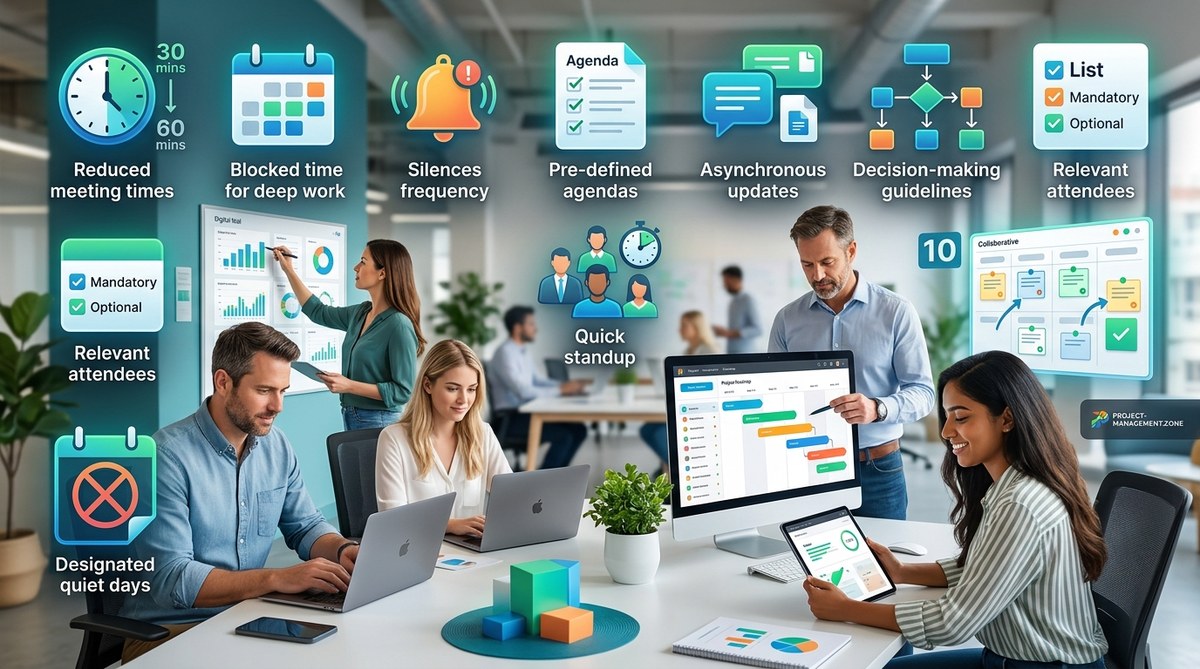
- Use structured async updates. Replace the daily “check-in” meeting with a shared document or a short video. Each person answers three questions: What did I finish? What am I working on? What is blocked? This keeps everyone informed without a meeting.
If you want to go deeper on structuring your workflow, check out our guide on streamlining team workflows for better project outcomes. It covers how to design a process that prevents bottlenecks before they form.
The Role of Tools in a Bottleneck-Free Workflow
Tools matter, but they are not the hero. A great tool with a bad process is just a fast way to do the wrong thing.
In 2026, the best tools are the ones that make bottlenecks visible. Look for features like:
- Cumulative flow diagrams that show work piling up in a single column.
- Cycle time analytics that reveal how long tasks spend in each stage.
- Automated notifications that nudge the person responsible for the next step.
Do not buy a new tool just because it is popular. Buy one that solves your specific handoff problem. For a deeper look at what to consider, read our breakdown of top project management tools to boost your team’s efficiency.
A Simple Weekly Rhythm to Keep Bottlenecks Away
Bottlenecks are like weeds. You pull them once, but they grow back if you do not maintain the garden. Build a weekly maintenance rhythm.
- Monday morning: Check the flow. Look at your cumulative flow diagram. Is any column growing faster than the others? That is your bottleneck for the week.
- Wednesday: Unblock one person. Ask your team who is waiting on something. Remove that block yourself if you can.
- Friday: Celebrate the flow. Note how many tasks moved to done. Share that number with the team. Momentum is a motivator.
This rhythm takes about 15 minutes a week. It is the single highest-leverage habit you can build as a manager.
If you want to improve how your team handles time and meetings, consider learning about time-boxing techniques for project managers who want faster delivery. It pairs well with a bottleneck-free workflow.
A Note on Async Communication in 2026
Distributed teams live and die by async communication. But most teams still treat async like a second-class citizen. They write long emails that nobody reads, or they post updates in a chat channel that scrolls away.
The fix is structure. Use a template for every async update. Keep it to three bullet points. If you need more detail, record a two-minute video. Video preserves tone and context in a way text cannot.
For a practical method on turning those updates into real documentation, see our guide on how to turn async video updates into usable project documentation. It will save your team from repeating the same questions over and over.
Your First Step Toward Faster Delivery
You do not need to fix everything at once. Pick one bottleneck. The one that frustrates your team the most. Apply the fix from the table above. Measure the result.
If you clear that bottleneck, a new one will appear. That is the nature of flow. But each time you clear one, your team gets faster. You build a culture of continuous improvement.
Start this week. Map your flow. Find the wait. Remove it. Repeat.
Your team is capable of more than their current workflow allows. Give them a process that matches their potential.