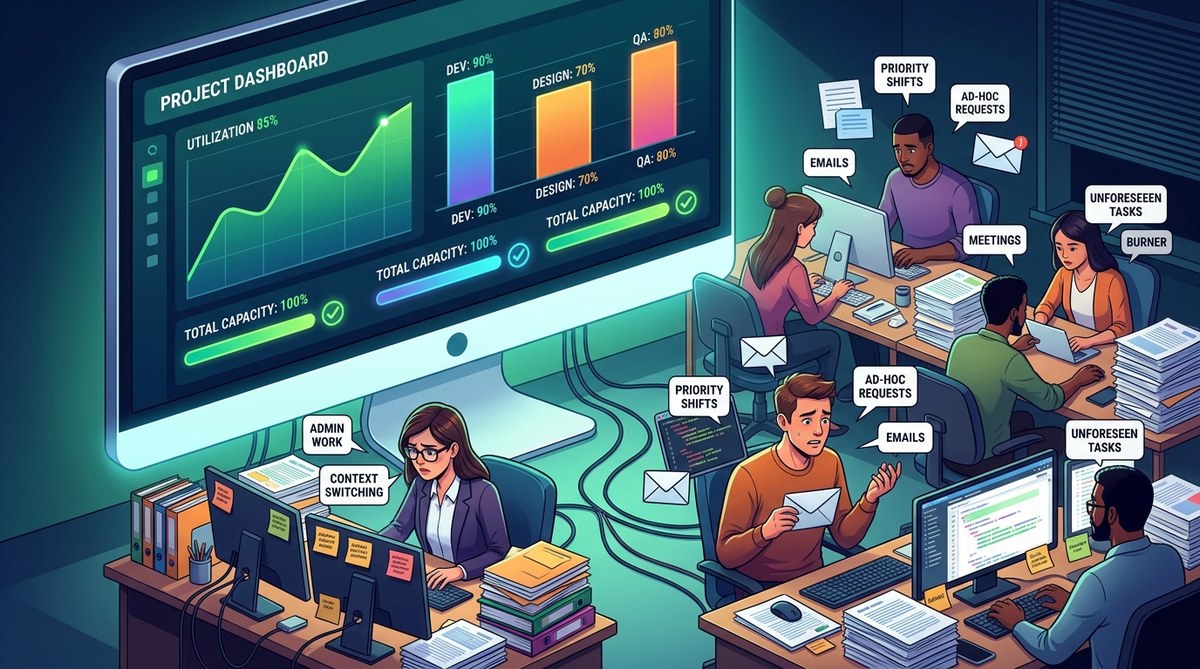
Somewhere between the third unplanned meeting and the fourth status update email, the day disappears. Project managers across industries know this pattern well. You arrive with a clear agenda and leave with a longer to-do list than you started with. The culprit is rarely laziness or poor intention. It is the absence of firm time boundaries around the work that matters most. Time-boxing changes that. It gives every task, every ceremony, and every focus session a hard edge, and that edge is what separates teams that ship from teams that talk about shipping.
PM Playbook at a Glance
Time-boxing means assigning a fixed, non-negotiable time limit to any activity before it starts. For project managers, applying it consistently across daily focus blocks, sprint ceremonies, and professional development sessions creates compounding gains in both team velocity and personal clarity. This article maps out exactly how to build that habit, one working block at a time, starting from your next sprint.
Why Most PMs Lose Time Without Realizing It
Time does not vanish all at once. It leaks. A standup that runs fifteen minutes long. A planning session without a defined endpoint. A retrospective that circles the same point for the third time. Individually, none of these feel catastrophic. Cumulatively, they cost a team hours every sprint and rob a PM of the focus window needed for real strategic thinking.
The root issue is that most calendar-based planning focuses on what needs to happen, not on how long each thing is allowed to take. When there is no ceiling on duration, conversations expand to fill whatever space is available. Meetings breed sub-meetings. Tasks without boundaries become multi-day affairs. The fix is not a stricter personality. It is a structural one.
Time-boxing supplies that structure. It makes the cost of drift visible and gives the PM a simple, repeatable tool to prevent it before it starts.
What Time-Boxing Actually Means in Practice
A time-box is a pre-committed, fixed-length period for a defined piece of work. When the time ends, the work stops or moves forward regardless of whether it feels complete. That last part is the hard bit for most PMs. The instinct is to keep going until something is finished. Time-boxing inverts that logic. The boundary is fixed. The scope adapts to fit within it.
This approach is baked into agile frameworks. Sprints are themselves time-boxes: a two-week window with a fixed end date that does not move because a few stories are still in progress. The same logic applies to individual working blocks, to ceremony durations, and to the time a PM carves out for thinking and learning.
The discipline works because it forces prioritization. When you know a session ends in forty-five minutes, you get to the most important point first, not last. Urgency created by a visible boundary is one of the most reliable productivity mechanisms available to any knowledge worker.
Structuring Your Daily Focus Blocks
The most effective PMs treat their calendar like a project plan. Every block of time has a purpose, a start, and an end. Random context-switching between emails, reviews, and stakeholder calls is replaced by intentional sequences of focused work. The key is designing the structure once and running it consistently.
A practical daily time-boxing structure for a project manager might include:
- Morning anchor block (60 to 90 minutes): Reserved for high-cognition work. Status updates, roadmap adjustments, risk assessment. No meetings during this window.
- Ceremony and collaboration block (variable, capped): Standups, check-ins, and reviews live here. Each has a pre-set end time communicated before the session begins.
- Async catch-up block (30 minutes): Emails, Slack, documentation. Batched into a single window rather than scattered throughout the day.
- Afternoon deep-work block (60 minutes): Planning documents, retrospective prep, stakeholder presentations. Closed door or calendar focus mode activated.
- Wind-down block (15 minutes): Review tomorrow’s priorities and update the task board. A clean exit from the day that prevents cognitive carry-over.
The specific durations are less important than the consistency. When your team knows your focus blocks, they route non-urgent requests to async channels rather than interrupting. That single behavioral shift reclaims significant working time each week without requiring anyone to work longer hours.
Time-Boxing Sprint Ceremonies to Cut Meeting Bloat
Sprint ceremonies are where many agile teams quietly lose their efficiency gains. The intent is structured, time-bound collaboration. The reality often drifts toward open-ended discussion that leaves everyone behind schedule and nobody clear on outcomes.
Explicit time limits for every ceremony are documented in the Scrum Guide, and they form the backbone of a disciplined sprint rhythm. A Sprint Planning session for a two-week sprint should last no more than eight hours. A Daily Scrum caps at fifteen minutes. Sprint Review and Retrospective each have defined upper limits for the same two-week cycle. These are not suggestions. They are the scaffolding that keeps momentum intact from one sprint to the next.
Sprint Ceremony Duration: Current Drift vs. Recommended Caps
| Ceremony | Typical Uncapped Duration | Recommended Cap (2-Week Sprint) | Estimated Time Recovered Per Sprint |
|---|---|---|---|
| Daily Standup | 20 to 35 minutes | 15 minutes | Up to 200 minutes across 10 days |
| Sprint Planning | 3 to 5 hours (often informal) | 8 hours maximum | 1 to 2 hours via structured agenda |
| Sprint Review | 2 to 3 hours | 4 hours maximum | 30 to 60 minutes via time-boxed demos |
| Retrospective | 90 to 180 minutes | 3 hours maximum | Up to 60 minutes with pre-set agenda |
To enforce these caps, assign a timekeeper role before every ceremony starts. Announce the end time at the opening. Use a visible countdown. When the box closes, park unresolved items in a follow-up document rather than extending the session. Teams adapt quickly once they know the boundary is real and consistently applied.
Protecting Deep-Work Sessions From Meeting Creep
Meeting creep is the slow erosion of focused work time. It starts with a fifteen-minute check-in that becomes a standing weekly slot. Then a new stakeholder requests a recurring update call. Before long, a PM’s calendar looks like a mosaic of thirty-minute fragments with no room for actual thinking or planning.
Defending deep-work blocks requires both structural changes and clear communication with the people around you. These approaches consistently produce results:
- Block focus time visibly on shared calendars so it appears as unavailable, not as white space to fill with impromptu calls.
- Batch meeting-heavy days so collaboration and deep work do not compete for the same mental bandwidth. Some PMs designate Tuesday and Thursday as high-meeting days and treat the rest as primarily protected focus time.
- Set a meeting request protocol with your team: async first, then a call only if async fails to resolve it within twenty-four hours.
- Apply an agenda rule that requires a stated outcome for every session before it gets scheduled. No outcome, no meeting.
- Audit your calendar monthly and shorten or remove recurring sessions that have drifted from their original purpose or no longer produce decisions.
None of these changes require sign-off from leadership. A PM can implement all of them individually, and the effect compounds quickly. Within two or three weeks, the default behavior of the people around you shifts to respect the boundaries you have set.
Using Timed Intervals to Sharpen Your PM Thinking
Faster delivery is not only about better process. It is also about a PM who thinks clearly, stays current on methodology, and arrives at planning sessions genuinely prepared. That requires carving out protected time for professional development and then treating that time with the same rigor you apply to a sprint ceremony.
A thirty-minute block, three times a week, dedicated to absorbing a new methodology, reviewing retrospective patterns from the last two sprints, or working through notes ahead of a planning session can compound significantly across a quarter. The challenge is rarely finding the content. It is maintaining focus discipline once the block starts. Distraction is the enemy of retention.
This is exactly where a study timer earns its place in a PM’s toolkit. Running a visible countdown during a learning block reinforces the time-box. It signals to your brain that the period has a defined end, which increases focus in the same way a sprint deadline sharpens a team’s output. PMs who apply timed-interval discipline to their own development absorb new approaches faster and carry that sharpness into every planning session they facilitate.
Treat professional development like a sprint story. Give it an estimate, give it a time-box, and review the outcome at the end of the block. What did you absorb? What needs a follow-up session? This practice builds continuity across weeks rather than sporadic cram sessions before a certification exam or quarterly review.
When Time-Boxing Gets Uncomfortable
There is a point in almost every PM’s time-boxing experiment where the discomfort peaks. A planning session ends before the team feels ready. A retrospective closes with items still on the board. A stakeholder pushes back on a capped review meeting. This discomfort is not a sign that the approach is failing. It is a sign that it is working.
Open-ended meetings feel thorough but often produce diluted decisions. A capped session with a clear outcome on the agenda forces people to arrive prepared and to prioritize their contributions. The quality of what gets decided in fifty minutes of focused, time-boxed discussion routinely outpaces what emerges from two hours of meandering conversation.
The discomfort also tends to resolve itself. After two or three sprints of capped ceremonies, teams begin to self-regulate. They bring better preparation because they know the clock is real. The PM’s job shifts from managing time during the session to ensuring the structure is clear before it starts. That is a meaningful upgrade to how a PM spends their energy.
The Delivery Habit That Compounds Across Every Sprint
Time-boxing is not a productivity trick. It is an operating principle. PMs who apply it consistently find that the benefits stack across every layer of their work. Sprint ceremonies run tighter. Focus blocks produce more. Professional development sessions yield usable insights. Stakeholders receive cleaner updates in less time.
The teams around a time-boxing PM also shift. They model the behavior. They start capping their own working sessions. They push back on open-ended requests. They build a culture where time has weight, and where a decision made in forty-five focused minutes is worth more than a three-hour drift through the same agenda items.
Delivery speed, at its core, is a function of how many good decisions a team can make in a given time window. Time-boxing raises that ceiling. It does not ask for more hours. It asks for better edges on the ones you already have. Build those edges deliberately, apply them consistently, and faster delivery stops being a goal on a roadmap. It becomes the way your team works.