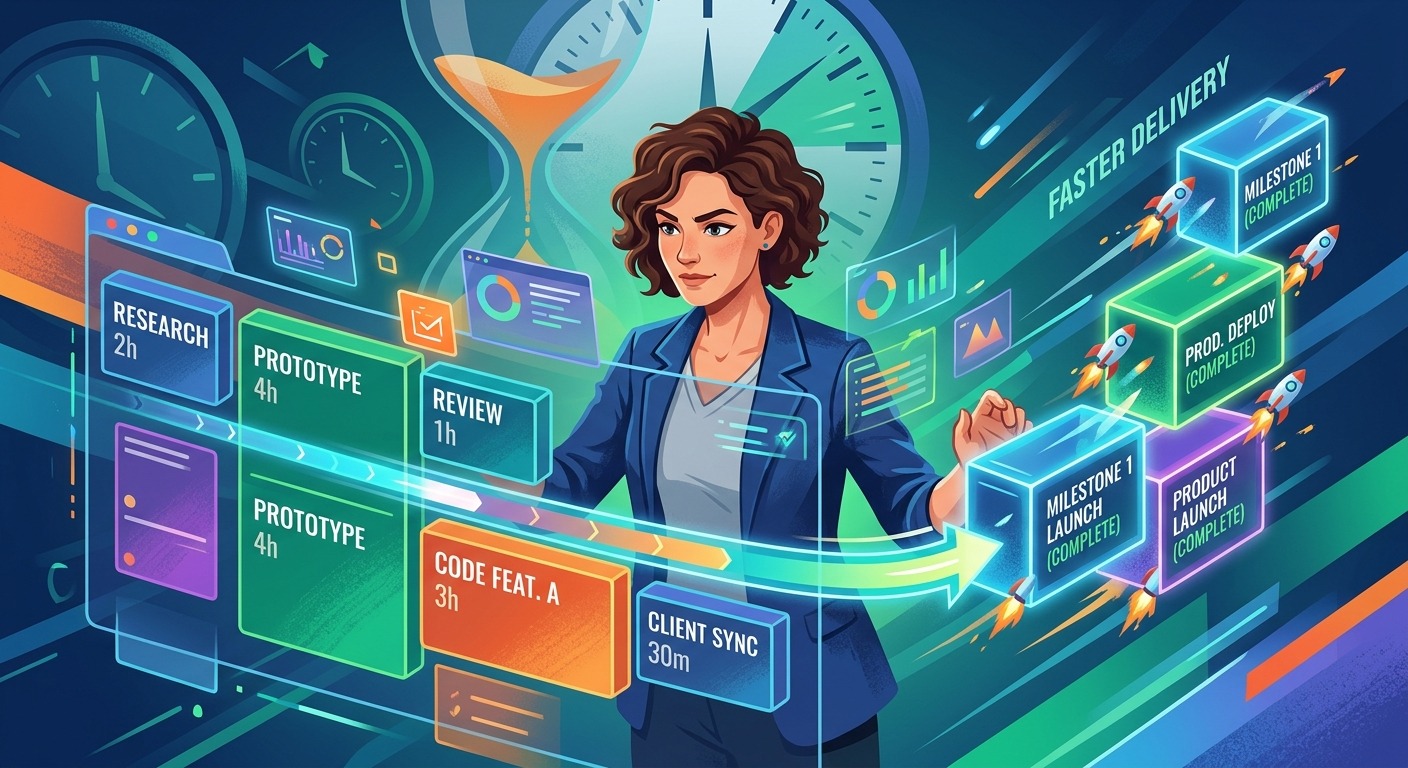
You have fifteen people in a room. Each one represents a different department. Marketing wants to build brand awareness. Engineering wants to reduce technical debt. Sales wants a feature that closes deals faster. Product wants to ship on time. Everyone is right. And yet, nothing moves.
This is the reality of cross-functional work in 2026. The problem isn’t talent. It’s alignment. When teams plan in isolation, they create conflicting priorities, duplicate effort, and slow decision-making. The cost shows up in missed deadlines, frustrated stakeholders, and projects that feel stuck in molasses.
But here is the good news. You do not need a massive restructuring or a week-long offsite to fix this. You can align cross-functional teams in under 30 minutes using a repeatable framework. I have used this with product teams, marketing departments, and engineering groups at mid-to-large organizations. It works because it forces clarity, not consensus.
Misalignment between departments is rarely about bad intentions. It is almost always about unclear priorities and invisible dependencies. In under 30 minutes, you can surface those gaps, agree on a single most important outcome, and assign clear owners for each blocker. This framework removes the need for lengthy meetings and complex restructuring.
The Real Reason Teams Stay Stuck
Most leaders think alignment means getting everyone to agree on everything. That is a trap. Alignment means getting everyone to agree on the single most important thing right now. When you try to align on everything, you align on nothing.
The typical cross-functional meeting fails because it becomes a status update. Each person reports what their team did last week. No one surfaces the real friction points. No one makes a clear ask. And at the end, everyone walks away with a different interpretation of what was decided.
To align cross-functional teams effectively, you need a different structure. You need a framework that surfaces hidden dependencies, clarifies the top priority, and assigns ownership in real time.
The 30-Minute Alignment Framework
This framework has three phases. Each phase takes about ten minutes. You will need a shared document or whiteboard, a timer, and a willingness to be direct.
Phase 1: The Single Outcome (10 minutes)
Start by stating the one outcome that matters most for the next two weeks. Not the quarter. Not the year. Two weeks.
Write this at the top of the shared document: “By the end of this sprint, we will have [specific outcome].”
Then go around the room. Each person states what their team needs to contribute to that outcome. The rule is simple: no one can talk about what they are doing outside of this outcome.
This phase reveals misalignment immediately. If marketing says the outcome is launching a campaign, but engineering says the outcome is fixing bugs, you have found your gap. Stop and resolve it before moving to phase two.
Phase 2: Dependency Mapping (10 minutes)
Now that everyone agrees on the outcome, map the dependencies. Use a simple table like this:
| Team | What We Need From Others | What We Are Providing | Blocked Until |
|---|---|---|---|
| Engineering | Final design specs from Product | API endpoints for Marketing | Design sign-off by Thursday |
| Marketing | Launch date confirmed by Product | Campaign assets for Sales enablement | Engineering completion by Friday |
| Sales | Updated demo from Engineering | Customer feedback on new feature | Demo ready by Wednesday |
This is where the real work happens. When you map dependencies in real time, you see the bottlenecks. You see that Product is waiting on Design, but Design did not know they needed to deliver by Thursday. You see that Sales is blocked by Engineering, but Engineering thought the demo was already done.
Do not leave this phase until every dependency has a date and an owner. If someone says “I need to check with my team,” put a five-minute timer on it. Send them to Slack or email their team lead right there. Do not let ambiguity slide.
Phase 3: Commitment and Escalation (10 minutes)
The final phase is about making commitments. Each person states:
- What they will deliver.
- When they will deliver it.
- What they will escalate if something blocks them.
Write these commitments down. Share the document with everyone immediately after the meeting. This creates accountability without micromanagement.
If someone cannot commit, ask them what they need to unblock themselves. Often the answer is a decision from a stakeholder who is not in the room. In that case, assign one person to get that decision within 24 hours. Do not let the team wait a week for an answer.
“The most expensive meeting is the one where everyone agrees but no one acts. Commitment without a deadline is just a wish.” — A product leader I worked with at a SaaS company.
Common Mistakes That Break Alignment
Even with a good framework, teams fall into traps. Here are the most common ones and how to avoid them.
| Mistake | Why It Happens | How to Fix It |
|---|---|---|
| Allowing status updates | People default to reporting because it is safe | Ban the phrase “Here is what we did.” Only allow “Here is what we need.” |
| Skipping dependency mapping | Teams assume everyone knows what they need | Make dependency mapping the second step, not an afterthought |
| Letting one person dominate | Strong personalities steer the conversation | Use a round-robin format. Each person gets two minutes to speak |
| No follow-up after the meeting | Alignment fades by the next day | Share the written commitments within 10 minutes of the meeting ending |
| Trying to align on everything | Teams try to solve all problems at once | Focus on the single most important outcome for the next two weeks |
When to Use This Framework
This framework works best when you have a specific initiative, launch, or sprint that requires input from three or more departments. Use it at the start of a new project, before a major milestone, or when you sense that teams are starting to drift.
Avoid using it for routine weekly check-ins. Overusing the framework will make it feel like another meeting. Save it for moments when misalignment is costing you time or money.
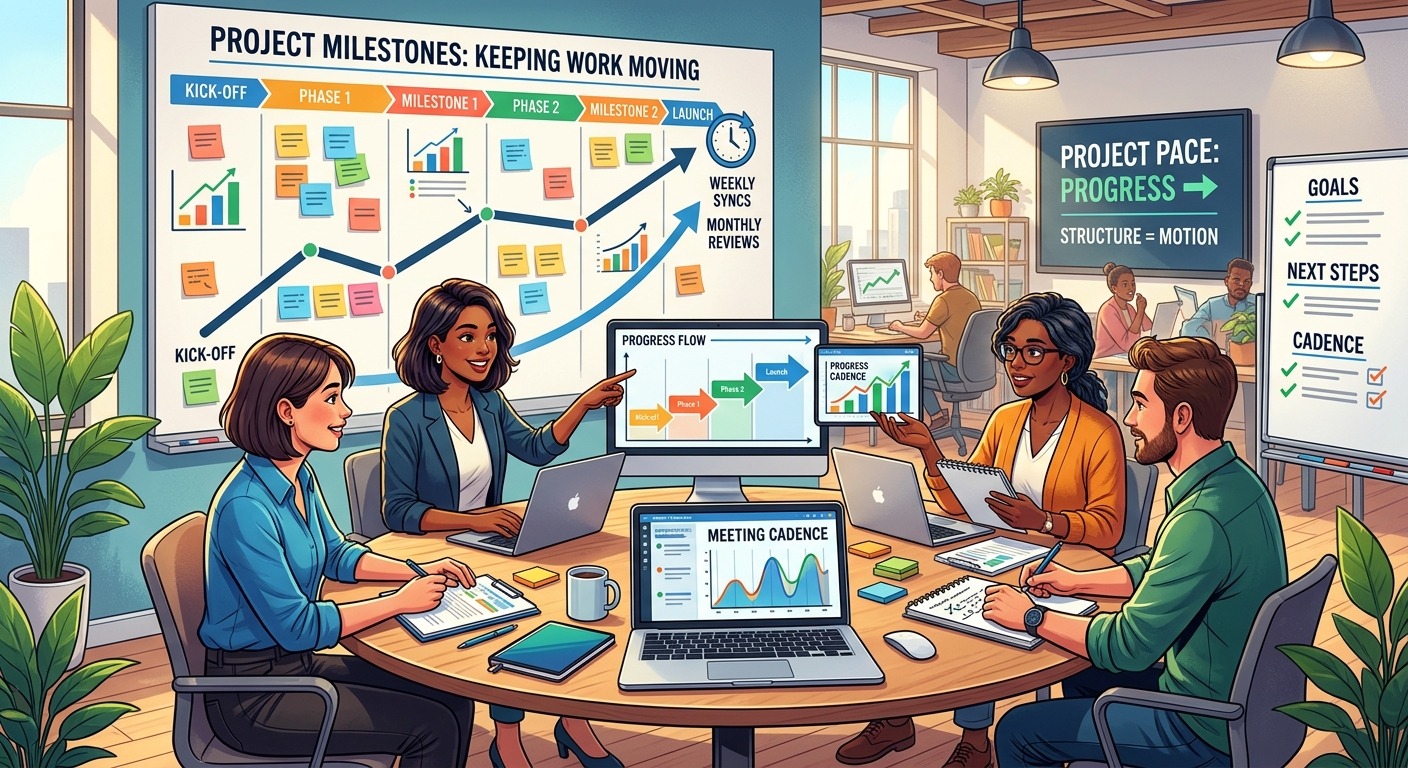
If you want to build a more sustainable rhythm for your team, consider learning how to build a project meeting cadence that keeps work moving. That will help you maintain alignment between these focused sessions.
How to Prepare for the Session
Preparation is minimal but important. Send a one-paragraph invite that states the outcome you want to achieve. Do not attach a 10-page document. No one will read it. Instead, include three bullet points:
- The single outcome we are aligning on.
- Each person’s role in the session.
- A request to come with one dependency they need from another team.
Set the expectation that this is a working session, not a presentation. People should come ready to make decisions, not to report.
A Real-World Example
Last year, I facilitated this session for a team launching a new mobile feature. The room had product managers, engineers, designers, marketers, and customer support leads.
In phase one, we discovered that marketing thought the launch date was two weeks away, but engineering had not started the backend work. The product manager had assumed engineering was already building it. That gap alone would have caused a two-week delay.
In phase two, we mapped that the designers needed final copy from marketing by Wednesday, but marketing thought they had until Friday. We adjusted the timeline on the spot.
In phase three, the engineering lead committed to a prototype by Friday. The marketing lead committed to final copy by Wednesday. The customer support lead committed to preparing a FAQ document by Thursday.
The feature launched on time. More importantly, the team reported feeling aligned for the first time in months. They knew exactly what to do and who to ask if something went wrong.
Tools That Support This Framework
You do not need fancy software to run this session. A shared Google Doc or a whiteboard works fine. But if you want to streamline the process, consider using a tool that visualizes dependencies and task ownership. For example, you can use top project management tools to boost your team’s efficiency to track commitments after the session ends.
The key is to keep the tool simple. If the tool requires training, people will resist using it. Pick something that everyone can open and edit without a tutorial.
What to Do When the Framework Feels Too Rigid
Some teams push back on structured meetings. They say it feels too corporate or too forced. If that happens, adapt the framework to your culture.
You can run this as a 15-minute stand-up instead of a 30-minute session. You can do it async using a shared document and a Slack thread. You can even do it over a video call with the document shared on screen.
The structure matters less than the principles: agree on one outcome, map dependencies, and make commitments. If you follow those three principles, you will align cross-functional teams faster than any rigid process could.
How to Handle Remote and Hybrid Teams
In 2026, many teams are still hybrid or fully remote. This framework works just as well over video calls. Use the same three phases. Use a shared document or a digital whiteboard like Miro or FigJam.
The biggest risk with remote sessions is that people multitask. Set a norm that everyone keeps their camera on and closes other tabs. If someone is distracted, call them in gently. Say “Sarah, what do you think about the timeline for the design handoff?” That brings them back without embarrassment.
For async teams, consider using async video updates as usable project documentation. You can record the dependency mapping phase and share it with people who could not attend.
A Simple Way to Measure Alignment
After the session, ask each person one question: “On a scale of 1 to 10, how clear are you on what we are doing and what you need to do?” If the average is below 7, you did not align them. Run the session again or spend more time on phase one.
You can also track alignment by measuring how long it takes to make decisions. If decisions that used to take a week now take a day, you are aligned. If decisions still stall, revisit your dependency map.
The One Thing That Changes Everything
If you take nothing else from this article, take this: stop trying to align cross-functional teams by asking them to agree on everything. Instead, ask them to agree on one thing. The one outcome that matters most. The one dependency that is blocking progress. The one commitment each person is making.
That single shift will save you hours of meeting time and weeks of project delays.
Keeping Momentum Between Sessions
Alignment is not a one-time event. It is a muscle you need to exercise. Schedule a 15-minute check-in three days after the initial session. Ask each person: “Are you on track with your commitment?” If someone is falling behind, adjust the plan immediately. Do not wait until the next scheduled meeting.
If you notice that the same dependencies keep surfacing session after session, that is a sign of a deeper structural issue. You may need to run a workflow audit to find the root cause of the recurring bottlenecks.
Your Next Step
You do not need permission to run this session. Pick a project that feels stuck. Invite the key people from each department. Block 30 minutes on everyone’s calendar. Use the three-phase framework. See what happens.
Most teams are one honest conversation away from alignment. This framework gives you the structure to have that conversation without it turning into a blame game or a venting session.
If you want to go deeper, check out master effective project planning strategies for seamless delivery. That article covers how to build alignment into your planning process from the start.
The goal is not to eliminate all friction. Friction is normal when smart people from different backgrounds work together. The goal is to make the friction productive. To turn it into better decisions and faster execution.
You can align cross-functional teams in under 30 minutes. The framework is here. The only thing missing is your decision to start.