Every project manager knows the feeling. You present a solid plan, everyone nods, and two weeks later a key stakeholder says, “That’s not what I asked for.” Scope creeps. Tensions rise. The timeline slips. Managing stakeholder expectations is often the hardest part of the job, harder than any technical challenge or budget constraint. The good news is that expectation mismatches are predictable, and they can be managed with the right toolkit.
This article provides a complete toolkit for managing stakeholder expectations in project management. You will learn a five-step process to identify, analyze, and align stakeholders. It includes a practical communication planning table, common mistakes to avoid, and a template for difficult conversations. Use these frameworks to reduce conflict and keep your next IT or construction project on track.
Why Expectations Go Off the Rails
Most expectation problems start before the project even begins. Stakeholders hear what they want to hear. They assume their pet feature will be included. They picture a delivery date that was never promised. Meanwhile, the project team operates from the written scope, which nobody read carefully.
The gap between what stakeholders imagine and what the team delivers is where conflict lives. Closing that gap is the core skill of managing stakeholder expectations project management. It is not about saying yes to everything. It is about clarity, repetition, and documentation.
The Five-Step Alignment Process
Use this numbered process every time you start a new phase or onboard a new stakeholder. It works for both IT rollouts and construction projects.
-
Identify every stakeholder, not just the loud ones. Create a list that includes decision makers, end users, regulators, and anyone who can block or delay the project. Do not forget the quiet person in the corner who holds historical knowledge.
-
Map their power and interest. Plot each stakeholder on a two-axis grid. Power is their ability to influence the project. Interest is how much they care about the outcome. This tells you who needs close management and who just needs occasional updates.
-
Document their explicit and hidden expectations. Ask direct questions. “What does success look like to you?” “What would make this project a failure in your eyes?” Write down every answer. Hidden expectations often surface when you ask about past project disappointments.
-
Create a shared reality document. This is not the project charter. It is a plain-language summary of what will be delivered, what will not be delivered, and the key assumptions behind the schedule and budget. Share it with every stakeholder and ask for a sign-off.
-
Build a communication rhythm. Schedule regular touchpoints based on the stakeholder’s power and interest level. A high-power, high-interest stakeholder needs a weekly 15-minute check-in. A low-power, low-interest stakeholder may only need a monthly email summary.
Your Communication Planning Table
Use this table to plan how you will engage different stakeholder types. Fill it out during the planning phase and revisit it when the project shifts.
| Stakeholder Type | Power Level | Interest Level | Engagement Method | Frequency |
|---|---|---|---|---|
| Executive sponsor | High | High | One-on-one status call | Weekly |
| Department head | High | Medium | Email brief + quarterly review | Monthly |
| End user group | Low | High | Town hall or demo | Bi-weekly |
| Regulatory body | High | Low | Formal report | Per milestone |
| Subject matter expert | Medium | Medium | Working session | As needed |
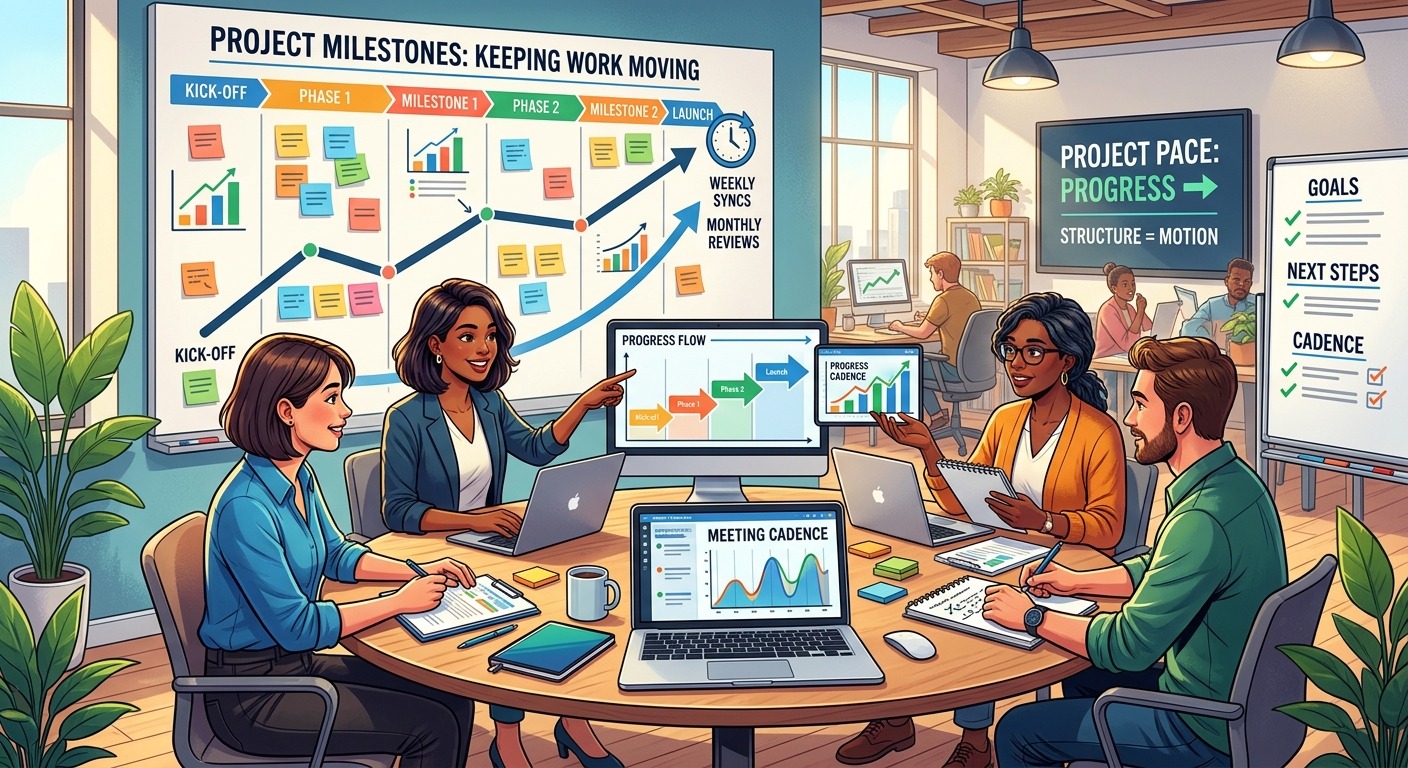
The key insight is that every stakeholder gets a tailored approach. A generic status report sent to everyone will satisfy almost nobody. For more on building this kind of rhythm, check out this guide on building a project meeting cadence that keeps work moving.
Common Mistakes and How to Avoid Them
Even experienced project managers slip up on these. Here is a bulleted list of the most frequent errors in managing stakeholder expectations project management.
- Overpromising to get approval. You land the project by saying yes to everything, then you spend months explaining why you cannot deliver. Instead, underpromise and overdeliver. Stakeholders respect honesty more than false hope.
- Assuming one conversation is enough. People forget. They get distracted. They change their minds. Repeat the key expectations at every major milestone. Say the same thing in different ways.
- Hiding bad news. When a deadline slips, tell stakeholders immediately. Bad news does not get better with age. Early warnings let stakeholders adjust their own plans and reduce the emotional reaction.
- Using jargon. A stakeholder who does not understand your terms cannot align with your expectations. Speak in business outcomes, not technical details. Instead of “we need to refactor the API gateway,” say “we are making the system faster and more reliable.”
- Ignoring low-power stakeholders. They may not have authority, but they can create noise. A disgruntled end user can poison the mood of an entire department. Give them attention and respect.
The Difficult Conversation Template
Sometimes expectations have already drifted, and you need to pull them back. Here is a script structure for that conversation.
“I want to check in on our shared understanding of this project. When we started, we agreed that the scope would include A, B, and C. I am hearing that you now expect D to be included. Is that correct? If D is a priority, we need to discuss what we remove from the current plan to keep the timeline and budget intact. I want to make sure we are aligned before we move forward.”
This approach does three things. It acknowledges the stakeholder’s perspective. It references the original agreement. It frames the trade-off as a choice, not a failure. You are not saying no. You are saying, “We can do that, but here is what it costs.”
Building Your Toolkit Over Time
A toolkit is not a one-time download. It is a living collection of templates, checklists, and communication plans that you refine with every project. Start with these three items.
- A stakeholder register spreadsheet with columns for name, role, power, interest, expectations, and communication preference.
- A shared reality document template that you can adapt for each project.
- A set of email templates for status updates, bad news, and milestone celebrations.
As you use these tools, you will find what works for your industry and your personality. An IT project manager might lean on mastering agile tools for faster project delivery. A construction PM might prefer top project management tools to boost your team’s efficiency. Adapt the frameworks to fit your context.
When Stakeholders Still Push Back
Even with the best toolkit, you will encounter stakeholders who resist alignment. They want more than you can give. They refuse to accept trade-offs. In those moments, go back to the shared reality document. Point to the written agreement. Ask, “Help me understand what changed since we agreed on this.” Often the pushback comes from a new priority or a fear that was not voiced earlier.
If the stakeholder is a senior executive who overrules the plan, document the new direction and its impact on scope, schedule, and budget. Send that documentation to them in writing. This is not about being defensive. It is about making the cost of their decision visible. Sometimes seeing the impact in black and white causes a reconsideration.
For more on keeping your planning solid from the start, read about master effective project planning strategies for seamless delivery.
Your Next Steps Start Today
Managing stakeholder expectations project management is not a mystery. It is a repeatable skill that improves with practice and the right tools. Start by identifying one stakeholder relationship that feels fragile. Apply the five-step process to that relationship this week. Create a shared reality document for your current project, even if you are already in the middle of it. It is never too late to reset expectations.
The toolkit works because it replaces guessing with structure. It turns vague hopes into concrete agreements. It gives you a framework for those hard conversations before they become crises. Use it. Adapt it. Make it yours. Your stakeholders will notice the difference, and so will your stress levels.